


TLV Bible
Tree of Life Bible Society
I approached TLV Bible as a daily reading tool rather than simply another digital Bible. Its focus is the Tree of Life Version, presented through the perspective of the Tree of Life Bible Society, and that gives the app a clear identity from the first reading. Instead of trying to be a broad library of translations, it centers the experience on Scripture through Jewish eyes. For readers who want that particular translation and its cultural framing, this is a much more purposeful choice than a general Bible app with dozens of unrelated versions.
The app sits in the Books & Reference category, is free to install, and is suitable for Everyone. It has reached over 50 thousand installs, with a 4.5 average from roughly 579 ratings and 168 written reviews. Those figures suggest a healthy, focused audience rather than a mass-market reading platform. I would recommend it most readily to someone who already knows why they want the TLV Bible, not to a reader looking for an all-in-one study suite.
How the current TLV Bible experience feels
My first impression is that the app’s main strength is concentration. The reading experience is built around Scripture, so the app does not feel like a social network, a devotional feed, or an overloaded reference database. That simplicity matters when I want to open a passage quickly, read without distractions, and stay with the text instead of navigating through a long list of unrelated tools.
The store summary describes the purpose as Scripture through Jewish eyes, and that is the most important thing to understand before downloading. The translation’s terminology and presentation are not just cosmetic choices. They shape how familiar passages sound and how readers encounter names, expressions, and cultural references. I found that especially useful when comparing the TLV wording with the language I have encountered in more traditional English Bible editions.
The best reason to use this app is not convenience alone; it is access to a specific translation with a distinct interpretive voice. If that distinction matters to you, the app feels intentional. If you only need any Bible for occasional quotation, a standard reading app may offer a faster route to multiple translations, search tools, audio, notes, and study resources in one place.
Related News

Why WhatsApp Messenger Still Makes Everyday Communication Feel Easy

Jurassic World: The Game Is the Better Dino Tycoon for Strategic Players

Threads in Real Life: Who Should Join, Lurk, or Leave

How SHEIN Turned Shopping Into an Endless Content Feed

How to Make Fortnite Feel Smarter on Mobile

Should You Switch to Microsoft Outlook on Mobile?
The developer, Tree of Life Bible Society, gives the app a direct connection to the translation it presents. That makes the product feel more focused than an app assembled around a large catalog of unrelated editions. I prefer that kind of clarity when I am trying to build a regular reading habit around one text.
A practical reading routine
A realistic use case is a quiet morning when I want to read a chapter before work. I can open the app, continue with the passage I planned to read, and keep the phone experience centered on the text. Later, I might return to the same chapter when preparing for a small-group discussion or checking the wording of a verse. The app is particularly suitable for that repeated, text-first routine because its value comes from making the TLV available whenever the phone is nearby.
Another useful scenario is comparing how a passage sounds in the TLV against a printed Bible already on the shelf. I would not treat the app as a replacement for every study resource, but it works well as a second viewpoint. Reading the same passage in a translation shaped by Jewish terminology can prompt questions about context and wording that might otherwise be missed.
Gallery
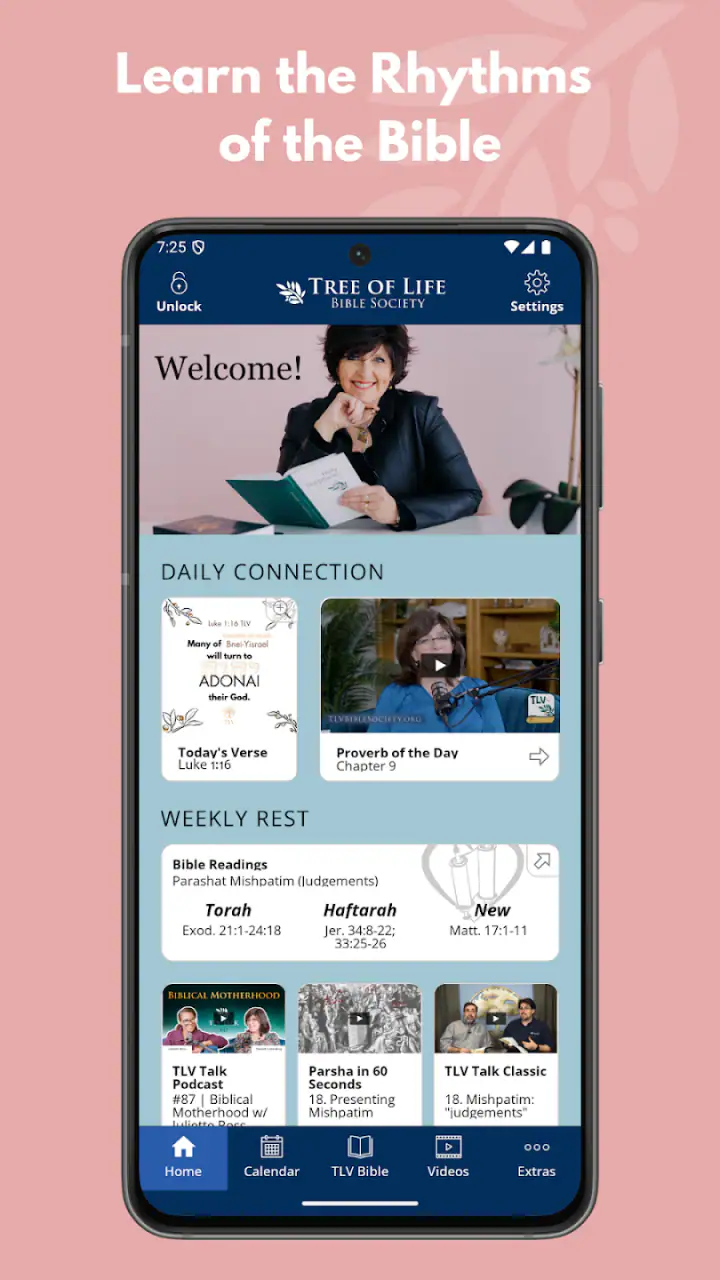
For travel or church use, a phone-based Bible is also more practical than carrying a separate volume, especially when I only want one translation. Still, I would check the passages I need before leaving rather than assuming every convenient reading situation will be available. A focused app can be excellent for reading, but it should not automatically be mistaken for a complete offline reference system.
What the version history tells me
The current version is 4.3.2, while the app was released on March 8, 2019. That combination suggests a product that has continued through multiple iterations rather than remaining at its original launch state. I see the version number as evidence of ongoing maintenance, but not as proof that every modern Bible-app expectation has been addressed. A mature version can indicate stability while still leaving room for improvements in navigation, accessibility, study depth, or device support.
For existing users, that evolution is likely more important than the number itself. People who have already made the TLV their preferred reading edition generally want dependable access and a familiar path back into Scripture. A current release gives them a reasonable basis for staying with the app, especially if it already fits their reading rhythm. I would update rather than cling to an older build, because Bible apps often benefit from compatibility and reliability work even when the visible reading screen changes very little.
New users should keep their expectations measured. Version 4.3.2 tells me the app is not a brand-new experiment, but it does not turn the product into a feature-heavy study platform. The central question remains whether the TLV translation itself is what you want to read. If the answer is yes, the current release is easier to justify. If the answer is no, a newer version number will not solve that basic mismatch.
What existing users gain, and what they should check
Someone who already reads the Tree of Life Version in print may appreciate having the same translation on a phone. That continuity can make it easier to move between home reading, commuting, church, and study without switching editions. I also like the idea of using the app for quick confirmation: when a verse comes up in conversation, the phone version can be more convenient than searching through a physical copy.
There is a subtle benefit in keeping a focused translation app alongside a broader Bible app. The general app can remain the place for cross-translation comparison, audio, or extensive notes, while TLV Bible becomes the dedicated home for the TLV text. That division is often better than forcing one application to do everything. It also prevents the distinctive wording of the TLV from becoming just another option buried in a crowded translation menu.
At the same time, I would not assume that a focused reading experience replaces personal study habits. I would still keep a notebook, a printed reference, or another trusted resource nearby when examining a difficult passage. The TLV can offer a valuable translation perspective, but a single Bible app should not be treated as the final word on historical background, language questions, or theological interpretation.
The minimum operating-system requirement is Android 7.0, which makes the app accessible to many older Android devices. That is helpful for readers who do not regularly replace their phones. It also means the app is not aimed only at the newest hardware. Before installing, I would still consider the age and general condition of the device, because the smoothness of any reading app depends partly on the phone itself.
Where the experience still has limits
The clearest limitation is focus. The app’s identity is its strength, but that same focus may feel restrictive to people who expect a complete digital study environment. If your normal workflow involves switching between many translations, adding extensive annotations, listening to narrated chapters, following a reading plan, and consulting dictionaries in one place, you may prefer a larger Bible platform.
I also see a practical trade-off in the free model. The app is free to download, but it includes in-app purchases ranging from $5.99 to $49.99 per item. That does not automatically make it poor value, but it means I would pay attention to what is available without payment and what belongs to optional purchases before building my entire study routine around it. Readers who want a completely predictable, no-purchase reading tool should make that distinction early.
For casual users, the purchase range may be more relevant than the download price. A free installation is a low-risk way to test the reading experience, but it should not be confused with every part of the product being free. I would begin with the passages I read most often, explore the available interface, and decide whether the app’s core usefulness is already sufficient before considering anything extra.
Another limitation is audience fit. The TLV’s Jewish perspective is a reason to choose it, but readers unfamiliar with that approach may need time to adjust to its vocabulary and phrasing. I would not judge that difference as a flaw. It is simply a reminder that translation preference is personal. Someone wanting the most familiar wording may find a mainstream alternative more immediately comfortable, while someone seeking a Jewish-oriented English translation may find the adjustment worthwhile.
Small workflow choices that make it more useful
I would use the app in three deliberate stages. First, read a passage without interrupting myself to investigate every unfamiliar phrase. Second, return to the same section and note which wording feels distinctive. Third, compare only the verses that raised questions using another trusted Bible resource. This prevents the app from becoming just a verse-search utility and turns the translation difference into a useful study prompt.
A second tip is to separate devotional reading from research. When I am reading for reflection, I want the TLV text to remain the center of attention. When I am researching, I expect to move between resources and record observations. Keeping those activities separate makes the focused design feel like an advantage rather than a missing feature.
A third trade-off concerns device storage and access habits. I would not install the app merely because it is free; I would keep it if I genuinely return to the TLV. A dedicated translation app earns its place when it supports a repeated routine, such as reading one chapter each morning, checking a passage before a discussion, or revisiting the same book over several weeks. If I only open it once every few months, a broader app may be more convenient.
For group study, I would prepare in advance. I would locate the relevant chapters, mark the questions I want to discuss elsewhere, and use the app during the meeting primarily for reading the TLV wording. That workflow avoids expecting the app to supply every commentary or research answer while still taking advantage of its strongest feature: direct access to the translation.
Who should choose it instead of a general Bible app?
I think TLV Bible is a strong match for readers who specifically want the Tree of Life Version, value Jewish cultural and linguistic context, and prefer a focused reading experience. It also suits people who already use another Bible app but want a dedicated place for this translation. The free entry point makes it easy to test without committing immediately to a paid product.
I would be more cautious recommending it to someone choosing a first Bible app with no particular translation preference. That person may benefit more from an established multi-translation application with broader study features. Likewise, readers who depend on elaborate notes, synchronized reading plans, built-in audio, or extensive scholarly references should compare those needs carefully before switching.
The age rating of Everyone makes the app broadly approachable for households and church settings. Even so, suitability is not only about age. A young reader, a long-time Bible student, and someone exploring translations for the first time may each need a different amount of explanation around wording and context. The app can serve all three, but the surrounding study method will matter.
What I would watch in future updates
Because the app has progressed to version 4.3.2, I would watch future releases for improvements that strengthen the balance between focused reading and practical study. Better ways to move through books, revisit passages, and manage personal reading would make the dedicated approach even more useful without turning it into a cluttered platform. I would also value continued attention to compatibility on older Android devices, since the Android 7.0 minimum keeps the app within reach of many established phones.
I would also pay attention to how optional purchases are presented. Clear separation between the free reading experience and paid additions helps users decide confidently. For an app whose main appeal is access to a specific Bible translation, transparency around extras is especially important; readers should understand what they are evaluating before they invest time in a long-term routine.
Most importantly, I would look for changes that preserve the app’s identity. Adding every fashionable Bible feature would not necessarily improve it. The better direction would be to make the TLV easier to read, revisit, and study while keeping Scripture at the center. That is the product’s clearest advantage over a general-purpose app, and losing that simplicity would weaken the reason many users choose it.
My final view is positive but specific. TLV Bible is not the universal answer for digital Bible study, and I would not recommend it on the install price alone. I recommend it because it gives the Tree of Life Version a dedicated place on an Android phone and presents a translation shaped by Jewish eyes. In my experience, that makes it most valuable as a focused companion: a practical way to read the TLV regularly, compare its distinctive wording thoughtfully, and carry that perspective into personal or group study.
If you want one app packed with every translation and research feature, choose a broader alternative. If you want this particular translation available in a straightforward, maintained app from the Tree of Life Bible Society, this is a sensible place to start. The strongest test is simple: read several passages you already know, notice how the TLV’s voice affects your understanding, and decide whether that difference deserves a permanent place in your reading routine.
FAQs for TLV Bible
What is TLV Bible, and what can I use it for?
TLV Bible is a mobile Bible application designed for reading and studying the Tree of Life Version, an English translation that highlights the Jewish roots and cultural context of the Scriptures. After exploring the app, users can generally use it for daily reading, searching for passages, bookmarking verses, and reflecting on biblical content wherever they have access to their device.
Is TLV Bible available for Android and iOS devices?
Availability can depend on the specific publisher and version listed in each app store, so it is important to check the current Android or iOS download page before installing. On compatible devices, the app is intended to provide a convenient mobile reading experience, although features such as offline access, synchronization, and supported operating-system versions may vary between platforms.
Does TLV Bible work without an internet connection?
Offline functionality is one of the most important details to verify before downloading TLV Bible. Some versions allow users to read previously downloaded or included Scripture content without an active connection, while other features may still require internet access. Searching, audio, updates, advertisements, or linked resources can depend on the particular edition installed.
What features does TLV Bible include for Bible study?
Depending on the version available on your device, TLV Bible may include useful study and reading tools such as verse search, bookmarks, notes, reading history, sharing options, adjustable text size, and reading plans. The translation itself is the central feature, especially for readers interested in wording and terminology that reflect the Jewish setting of the Bible.
Is TLV Bible free to download, and does it contain advertisements or purchases?
The price and monetization model may differ between the Android and iOS listings. TLV Bible may be offered as a free download, but some editions can include advertising, optional purchases, premium tools, or paid content. Before installing, review the store description, in-app purchase section, permissions, and privacy information so you understand what the selected version provides.
Pros
- Clear
- readable Bible text designed for everyday study.
- Useful search tools help locate verses and passages quickly.
- Works well for personal reading
- reflection
- and devotional use.
- Convenient access to Scripture on a mobile device.
- Simple interface is easy for new users to understand.
Cons
- Some features may require an internet connection or extra downloads.
- The app may include ads or promotional elements in the reading experience.
- Limited study resources compared with dedicated Bible study apps.
- Text display and navigation options may feel basic for advanced users.
- Availability of certain translations or features can vary by region.


